
News
EU Safety Regulation Clarified - What the Alcolock Requirement Really Means
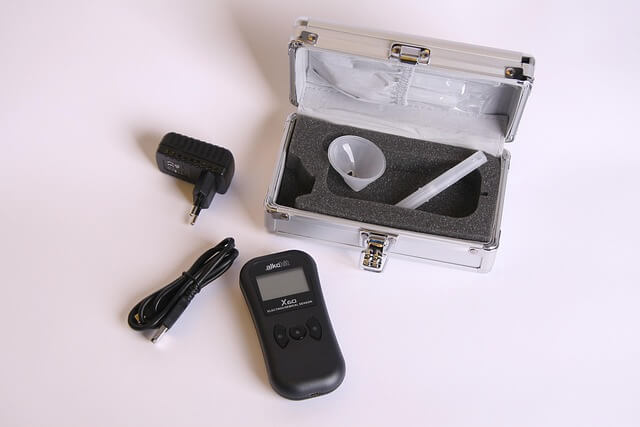
Contrary to widespread reporting, the EU has not introduced a general obligation for drivers to use alcohol interlocks.
Regulation (EU) 2019/2144 mandates technical preparation of vehicles only — leaving any usage obligation entirely to national law. This distinction defines the boundary between EU competence and Member State discretion, and it carries direct consequences for manufacturers, fleet operators, and legal practitioners.
Technical requirement, not behavioural mandate
Under Article 6 of GSR II, all new motor vehicles must incorporate a system enabling alcolock installation. The technical specifications are set out in Commission Delegated Regulation (EU) 2021/1243. The obligation falls on vehicle manufacturers only.
|
✓ Manufacturers must • Prepare vehicles for alcolock retrofitting • Provide technical installation documentation • Meet EN 50436 interface standards |
|
✗ The regulation does NOT • Require active alcolocks in new vehicles • Create any EU-wide driver use obligation • Mandate pre-departure breath testing |
National laws remain decisive
Alcohol is implicated in around 25 % of all EU road fatalities. Yet progress toward the EU’s Vision Zero target — a 50 % reduction in road deaths by 2030 — is critically short: 19,800 deaths were recorded in 2024, a 3 % drop, against a trajectory requiring roughly 7 % annually. By mandating vehicle-level preparation, the EU has lowered the barrier for national alcolock programmes without creating one. Whether drivers must actually use a device is determined by each Member State alone.
|
Country |
Status |
Key detail |
|
Sweden, Finland, Belgium, France, Netherlands, Denmark |
Statutory |
Established statutory schemes targeting drink-driving offenders, ranging from 2004 (France) to 2015 (Denmark). Mandatory in specific transport sectors and as licence reinstatement conditions. |
|
Austria |
Statutory |
National rehabilitation programme since 2017. Combines alcolock use with structured psychological rehabilitation (“FAHRFIT”). |
|
Italy |
Statutory |
Mandatory since 14 December 2024 under Law 177/2024. BAC > 0.8 g/l: two-year mandatory use. BAC > 1.5 g/l: three years. The most recently enacted and most precisely calibrated scheme in the EU. |
|
Norway |
Programme |
Long-standing programme; lowest road fatality rate in Europe (20 per million, 2024). Mandatory on school buses. |
|
Spain, Ireland |
Under development |
Active policy development. Spain hosted an ETSC “Safe and Sober” conference in October 2024; Ireland’s working group has recommended a mandatory programme. |
|
Germany |
No programme |
No statutory programme. The StVG and FeV contain no alcolock provisions. The largest Member State without a scheme, despite being bordered by five jurisdictions that have one. |
Implications for practice
• Manufacturers: full compliance with Delegated Regulation (EU) 2021/1243 required; non-compliant vehicles cannot receive EU type-approval.
• Fleet operators: national alcolock obligations vary by jurisdiction; cross-border operators face different requirements depending on operating territory.
• Criminal and administrative practitioners: alcolock programmes are increasingly relevant in sentencing, licence reinstatement, and rehabilitation proceedings across multiple jurisdictions.
• Product liability: a chain of exposure connects vehicle manufacturer, device manufacturer, and installer under Directive 85/374/EEC.
Bottom lineRegulation (EU) 2019/2144 does not introduce an EU-wide drink-driving enforcement mechanism. It reshapes the technical architecture of the vehicle fleet, making alcolock deployment straightforward across the entire EU market. The decisive question is not whether the technology exists. It is which Member States will choose to mandate its use — and when. |
Members’ area — Full legal analysisThe complete legal framework, the EN 50436 technical standards, the type-approval mechanisms, an analysis of responsibilities within the EU and a detailed assessment for each country, including liability scenarios in accordance with Directive 85/374/EEC, will soon be available exclusively to members in the ietl.net members' area. |